
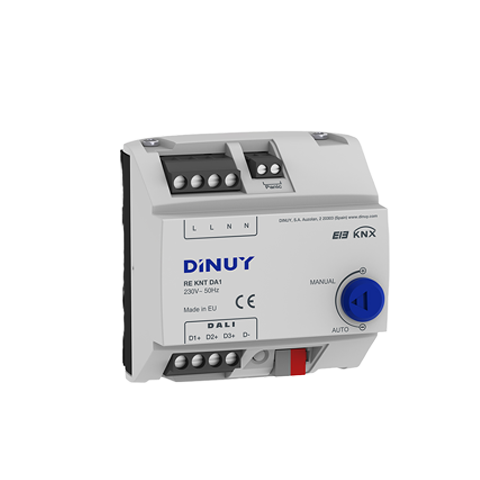
What changed
DALI-1 (the original IEC 62386 device types from the early 2000s) defined the bus protocol and a limited set of standardised device types, but left large parts of commissioning, addressing behaviour and multi-master control loosely specified — manufacturers filled the gaps differently. DALI-2 tightened the specification considerably: standardised control device types (push-buttons, sensors), formal certification testing through the DiiA (Digital Illumination Interface Alliance), and clearer rules for bus arbitration when more than one controller is present.
Where compatibility actually breaks
- Certification, not just protocol version. A product can be described as "DALI-2" without carrying DiiA certification for the specific device type claimed. Certification is per device type (control gear, input device, application controller), not a blanket pass for the whole product.
- Multi-master control. DALI-1 systems generally assumed a single controller on the bus. Mixing an uncertified legacy DALI-1 control gear with a DALI-2 multi-master input device can produce unpredictable arbitration behaviour — not a hard fault, but inconsistent response under contention.
- Broadcast vs addressed commands. Some older DALI-1 gear responds inconsistently to DALI-2 device-type-specific commands it was never designed to interpret, silently ignoring them rather than erroring.
Practical guidance for specification
- Don't assume DALI-1 and DALI-2 control gear can be freely mixed on the same line just because both terms include "DALI" — check the device type and certification status of each product being combined
- For anything involving DALI-2 input devices (push-buttons, presence sensors reporting over DALI rather than KNX), confirm the control gear on that line is DALI-2 certified for standard device types, not legacy DALI-1
- When retrofitting into an existing DALI-1 installation, treat it as a compatibility check per luminaire type, not a blanket assumption
The short version: "DALI-2" tells you the generation of the specification a device claims to meet. It doesn't tell you what's actually been tested — and that distinction is exactly where integration problems tend to surface on site.
Share:
Constant Light Control: How Daylight-Regulated Dimming Actually Works