

If you are designing or building a smart home, you will probably hear two terms: KNX and Matter. They are often discussed as competing technologies, but they do different jobs.
The simplest way to understand them is this:
KNX is the permanent control infrastructure of the building. Matter is a common language that helps compatible smart products and apps work together.
A well-designed home can use either one, but premium new homes and major renovations often benefit from using both in clearly defined roles.
What is KNX?
KNX is an international, open standard for building automation. It is used to connect and control architectural lighting, blinds and curtains, heating and cooling, sensors, wall controls, energy monitoring and whole-home scenes.
In a new home, KNX is normally planned with the electrical and mechanical services. A dedicated KNX cable links compatible controls and equipment throughout the building. The devices communicate locally, so a light switch can still operate its assigned lights without relying on an internet connection or remote cloud service.
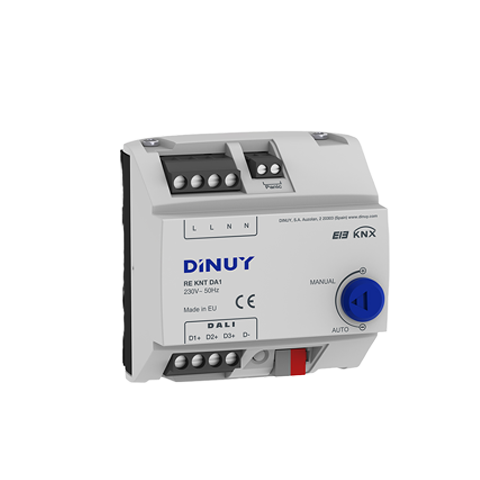
KNX is not a single brand. Many manufacturers make certified KNX products, giving the project team a choice of switches, sensors, actuators, gateways and interfaces. The system is programmed using a common professional tool called ETS.
What KNX means for a homeowner
KNX should feel like a home that responds consistently: one “Goodnight” button turns off selected lighting, lowers blinds and adjusts the temperature; a hallway lights softly after dark; western shading helps manage afternoon heat.
What KNX means for an architect
KNX is part of the building-services strategy. It affects switchboard space, cabling, lighting control, motorised shading, sensor locations, wall-control selections and coordination between electrical, mechanical and interior packages.
It should therefore be considered during design development, not selected after the electrical drawings are complete.
What is Matter?
Matter is also an open standard, but its role is different. It was created to make compatible smart-home products work across major consumer ecosystems with less dependence on separate brand-specific integrations.
Depending on the product and installation, Matter can connect devices such as smart locks, plugs, lamps, sensors, thermostats, blinds and bridges. It can also allow supported devices to appear in familiar platforms such as Apple Home, Google Home, Amazon Alexa, Samsung SmartThings or Home Assistant.
Matter devices may communicate over Ethernet, Wi-Fi or Thread. Thread is a low-power wireless network used by some Matter products and requires a compatible Thread border router.
What Matter means for a homeowner
Matter can make it easier to add compatible products and use the control platform the household prefers. It gives the owner more flexibility at the consumer-device layer without requiring every product to come from one manufacturer.
What Matter means for an architect
Matter is generally not a replacement for coordinated lighting control or building-services design. It is better treated as an interoperability layer: useful for selected devices, apps and later additions, while permanent infrastructure is resolved separately.
KNX and Matter at a glance
| Question | KNX | Matter |
|---|---|---|
| Primary role | Professional building control | Interoperability between compatible products and platforms |
| Place in a project | Permanent wired infrastructure and building services | Connected devices, apps and ecosystem integration |
| Common examples | Lighting, blinds, climate, sensors and room controls | Locks, plugs, wireless sensors, lamps and smart-home apps |
| Best time to consider it | Early design and documentation | During system design and product selection |
| Internet required for basic local operation? | No | Not necessarily; some app, voice and remote services may require it |
How do KNX and Matter work together?
A gateway or server connects the two worlds. In the Kadan ecosystem, 1Home Server KNX Pro can bridge KNX devices into Matter-compatible platforms and bring supported Matter devices into automations with KNX.
Consider a typical arrival sequence:
- A compatible Matter smart lock is unlocked.
- The event is passed through the 1Home system.
- KNX activates the home's arrival scene.
- Selected lights turn on, the entry temperature is adjusted and blinds move to the intended position.
Or the direction can be reversed: a KNX wall switch can control a supported Matter lamp as part of the same room scene. The homeowner experiences one action. Behind it, each technology performs the job it is best suited to.
What happens if the internet stops working?
A properly designed KNX installation continues to perform its local building-control functions without the internet. The wall controls, lighting, blinds and programmed local logic do not need a remote cloud service simply to communicate.
Matter is also designed for local communication, but the complete user experience depends on the selected devices and platform. Remote access, software updates and many voice-assistant functions may still require an internet connection.
The design principle is straightforward: do not make essential room functions depend on a phone, voice assistant or cloud service.
Do you need both?
Not every project does. A smaller renovation may use selected Matter products where new control cabling is impractical. A tightly defined commercial space may use KNX without consumer smart-home platforms. A premium new residence may use KNX for permanent building systems and Matter for selected devices and the owner's preferred apps.
The right answer depends on the project stage, the functions being controlled and how long the installation is expected to serve the building.
Five questions to ask during design
- Which functions must work even if the internet is unavailable?
- Which systems are permanent parts of the architecture?
- Which consumer devices or control apps does the owner genuinely want?
- How will physical switches, apps and automatic behaviour remain consistent?
- Who will commission, document and support the completed system?
The practical conclusion
KNX and Matter are easier to understand when they are not treated as rivals.
KNX gives the building a robust, professionally commissioned foundation. Matter gives compatible products and platforms a shared language. A device such as 1Home Server KNX Pro can connect them into one considered experience.
For architects, the key is to coordinate KNX with lighting, electrical, mechanical, shading and interiors early. For homeowners, the goal is simpler: essential functions should always feel intuitive, while new technology can be added without turning the home into a collection of disconnected apps.
Explore 1Home Server KNX Pro or talk to Kadan about your project.
Share:
The Best Smart-Home Interface Is the One Guests Understand Instantly
Seven Decisions to Make Before Your Smart-Home Cabling Is Locked In