
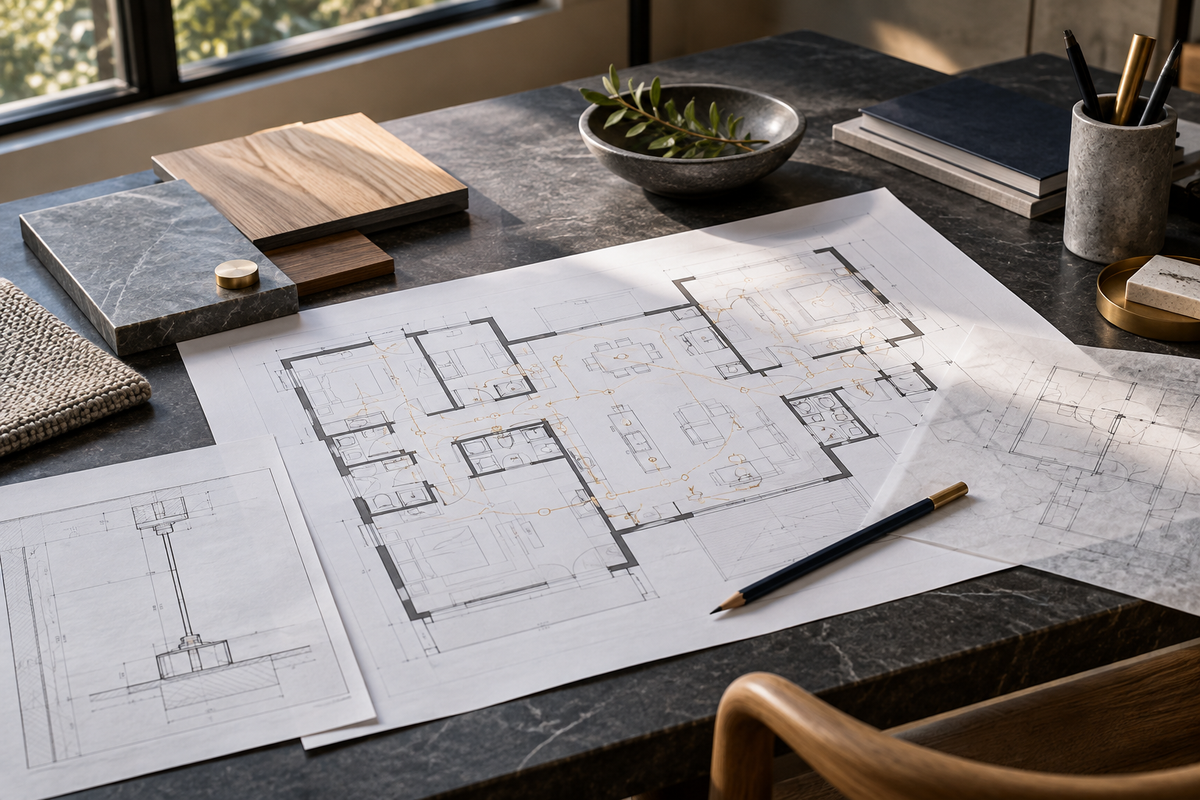
The costliest smart-home problem is rarely a faulty keypad. It is a decision that was never made before the walls closed.
A premium automation system touches lighting, electrical, mechanical, window furnishings, security, networking and interiors. If those disciplines are coordinated late, the result is predictable: compromises, variation costs and controls that look added on.
These seven decisions give the design team a clearer brief before cabling and switchboard work are locked in.
1. What must always work locally?
Start with failure, not features. If the internet is unavailable, which functions must continue normally? Lighting, blinds and temperature control should not depend on a cloud connection for everyday operation.
This question helps separate the home's core infrastructure from optional services such as remote access and cloud-based voice control. It also exposes systems that look impressive in a demonstration but become fragile when one external service is interrupted.
2. What should happen automatically?
Automation is most valuable when it removes a small, repeated burden. It is least valuable when it surprises the occupants.
List the moments that happen every day:
- arriving home after dark;
- leaving for work or school;
- moving through halls at night;
- protecting rooms from afternoon heat;
- preparing entertaining areas;
- settling the house for sleep.
Each is a better starting point than a list of devices. A good integrator can translate those routines into sensors, scenes and schedules without removing manual control.
3. Which loads need switching, dimming or tunable control?
“Lighting control” is not one decision. Decorative pendants, architectural downlights, LED strip, landscape lighting and task lighting may all have different drivers and dimming requirements.
Confirm the luminaire, driver and control method together. Ask for representative fittings to be tested where dimming quality is critical. This is the moment to identify minimum levels, flicker, fade behaviour and circuit grouping — not after hundreds of fittings have arrived on site.
4. How will blinds, curtains and climate cooperate?
Shading affects glare, heat gain, privacy and the load on the heating and cooling system. Treating it as a separate decorative package wastes an opportunity for the building to respond as a whole.
Coordinate motor selection, power, control cabling, pockets, access and limits early. Then decide the intent: should western blinds lower based on sun and temperature, or only when a room is occupied? Should an open door pause climate control? The right answer depends on the home and its occupants.
5. What should each wall control do?
A wall control is part of the interior architecture. Its finish, proportion, engraving and position matter — but so does the mental effort it demands.
Prioritise room-level actions over individual circuits. “Cook”, “Dine” and “All off” are easier to understand than six buttons named after electrical loads. Keep common actions in consistent positions across the home, and avoid filling every available button simply because it exists.
6. What needs a wire, and what benefits from flexibility?
Wireless products are useful, particularly in renovations and for future additions. They are not a substitute for planning the permanent infrastructure of a new build.
Discuss KNX bus routes, network points, access points, equipment locations, door stations, touch panels, sensors, motorised shading and spare capacity before the electrical package is final. A modest amount of well-placed infrastructure can preserve options that are costly to recreate later.
7. Who owns the final experience?
Many trades contribute to a smart home, but someone must be responsible for making the finished system behave coherently.
Define who will coordinate the design, maintain the point list, commission scenes, label the installation, back up the project files and support the homeowner after handover. Ask what documentation the owner will receive and how future changes will be handled.
The best time to simplify a smart home is while it still exists on paper.
A better brief creates a better home
You do not need to choose every product before design begins. You do need clarity about the experience: what should be automatic, what should remain physical, what must work locally and how the home should adapt over time.
When those decisions are made early, KNX gives the project team a flexible, multi-manufacturer foundation instead of a collection of isolated subsystems.
Explore KNX for a modern home or discuss your plans before documentation is locked in.
Share:
The Best Smart-Home Interface Is the One Guests Understand Instantly
KNX and Matter Explained: What They Do in a Modern Home